

For Veterans Who Served on the Front Lines, Going Back to School May Be the Most Challenging Mission
After answering the call to serve, student veterans at the University of Miami are navigating a new assignment: adjusting to civilian life on campus. Their stories of resilience, sacrifice and service take center stage as the university works to ensure they find purpose, support and community beyond the uniform.
By Tevonae Brown | CommunityWire
Nov 11, 2026
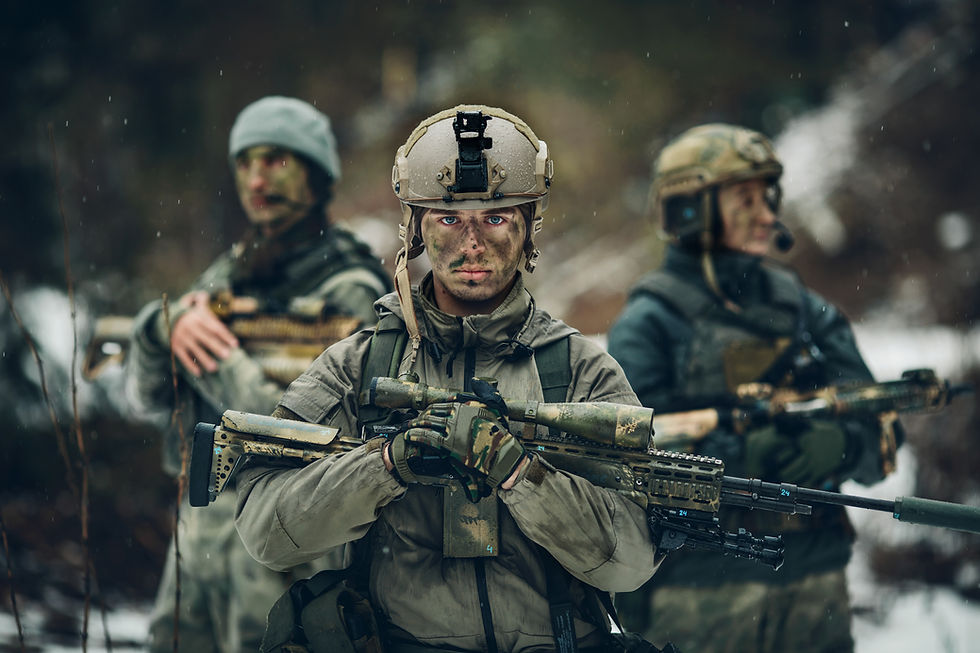
Photo of US soldiers via Wix
CORAL GABLES, Fla. — Above the bookstore on the second floor of the Whitten University Center at the University of Miami, a lounge brings together people who seem to have already lived a few lives.
They possess adaptability and acumen that the average undergrad does not. These people are labeled as veterans and military-connected students, and for many of them, the lounge was the first place at the University of Miami that felt like home.
On Veterans Day and throughout the year, the Veterans Resource Center at the University of Miami is working to make sure every veteran is finding a sense of home on campus.
“More than 600 UM students receive VA education benefits,” said Jon Baldessari, Director of Veterans Resource Center. About half are veterans, and the others are military-connected students. Once ROTC cadets are factored in, the center supports more than 700 students through engagement, support services and community partnerships.
The biggest challenge, Baldessari said, is the shift from military life to student life.
“A 25-year-old who enlisted out of high school and served eight years is entering a very different world and must learn to translate that service into resumes, internships and job applications. It’s a process, it’s a progression,” Baldessari said. “Some people proceed through that fairly rapidly or consistently. They have good days and they have not-so-good days.”
Take a student like Ethan McKenna, who is pursuing a Master of Business Administration. A former Air Force staff sergeant who served for seven years, he has adjusted well to student life despite having to unlearn the sense of constant urgency he experienced in the military. He noted that between the Veterans Resource Office and the shared mindset among veteran peers, it makes him feel a sense of belonging when it comes to asking for help.
“It’s never, ‘I can't do this.’ It’s just, ‘I'm having trouble with this,’” McKenna said.
On the other hand, there are student veterans whose transition was more challenging. After spending four and-a-half years on active duty in the Coast Guard as a boat mechanic, on call around the clock for search-and-rescue cases, followed by a year in the reserve, Estuardo Alejandre-Marr, 29, finds himself feeling out of place. That’s not only just because of his military experience but the generational difference between him and his classmates.
Everything he did while in the military was centered around being ready to save a life, Alejandre-Marr explained, down to working out so he could be strong enough to pull someone out of the water.
“I don't think the average college student can fathom that student veterans have lived pretty extreme lives,” Alejandre-Marr said. Most of his classmates are the age he was in uniform. At 18, he said, “I was literally pulling dead people out of the water because we couldn’t get there in time.”
Now he is surrounded by peers who are on their phones or shopping on laptops during class. College is not a life-or-death situation, Alejandre-Marr noted, and without that sense of purpose, it can feel dull.
There are close to 16 million veterans in America, according to the last US Census, and veterans suffer from higher rates of depression, PTSD, addiction and other illnesses. One reason that UM and many other universities offer veterans support is to ensure that America’s soldiers-turn-students are able to thrive amid the stresses of college life.
Although transiting from military life to student life looks different for each veteran, a few things they agreed on were that military life has shaped them to be disciplined, show compassion and work hard to make it to the top. Student veterans said that it was easy for them to stay disciplined and meet their deadlines because of how demanding military responsibilities were.
McKenna said that the military taught him how to face challenges and deconstruct them. Alejandre-Marr offered that he channels his sense of service into mentoring younger students, and serves as the student government veterans senator and the veterans group’s outreach coordinator.
“They call me unc,” he said jokingly, “because at the outings where alcohol is served, I’m the one who stays to make sure everyone is okay, then leaves around 9 p.m.”
Student veterans often bring a perspective of selflessness to campus by being trained to step forward to protect others, often putting their lives on the line to keep their communities safe. That sense of duty doesn’t end when the uniform comes off. Many display discipline, leadership and a steady presence that make classrooms and student organizations stronger. Continuing to make sure they feel seen and heard is a way the university can give back to those who have already given so much and ensure they have the resources and community they need to succeed.
Since Veterans Day and UM homecoming fall during the same week this year, the Veterans Resource Office has many events planned to honor veterans. On Friday Nov. 13, the start of homecoming weekend, the center will host Rally Point, a networking event pairing student veterans with alumni who have served. There is also an appreciation breakfast with Veterans Unite, a group for faculty and staff with prior service, that follows on the Monday after homecoming.
While these are good efforts to make sure student veterans are feeling seen and supported, Baldessari encourages all students to stop by and get to know the Veteran Resource Office. The worst outcome, he said, is not just a veteran graduating without ever engaging with the center but one quietly struggling with their transition from military to student life.
“I just want student veterans to know if you are struggling, you are just one conversation away from being okay,” said Alejandre-Marr.
Not every superhero wears a cape. Some of them are sitting in class or making their way across campus dressed like any other student, rarely if ever letting on that they used to spend their days dressed in combat fatigues. Now, they’re on a different kind of mission and charting a new future. But like dog tags around a soldier’s neck, they take their military experience with them everywhere they go.
